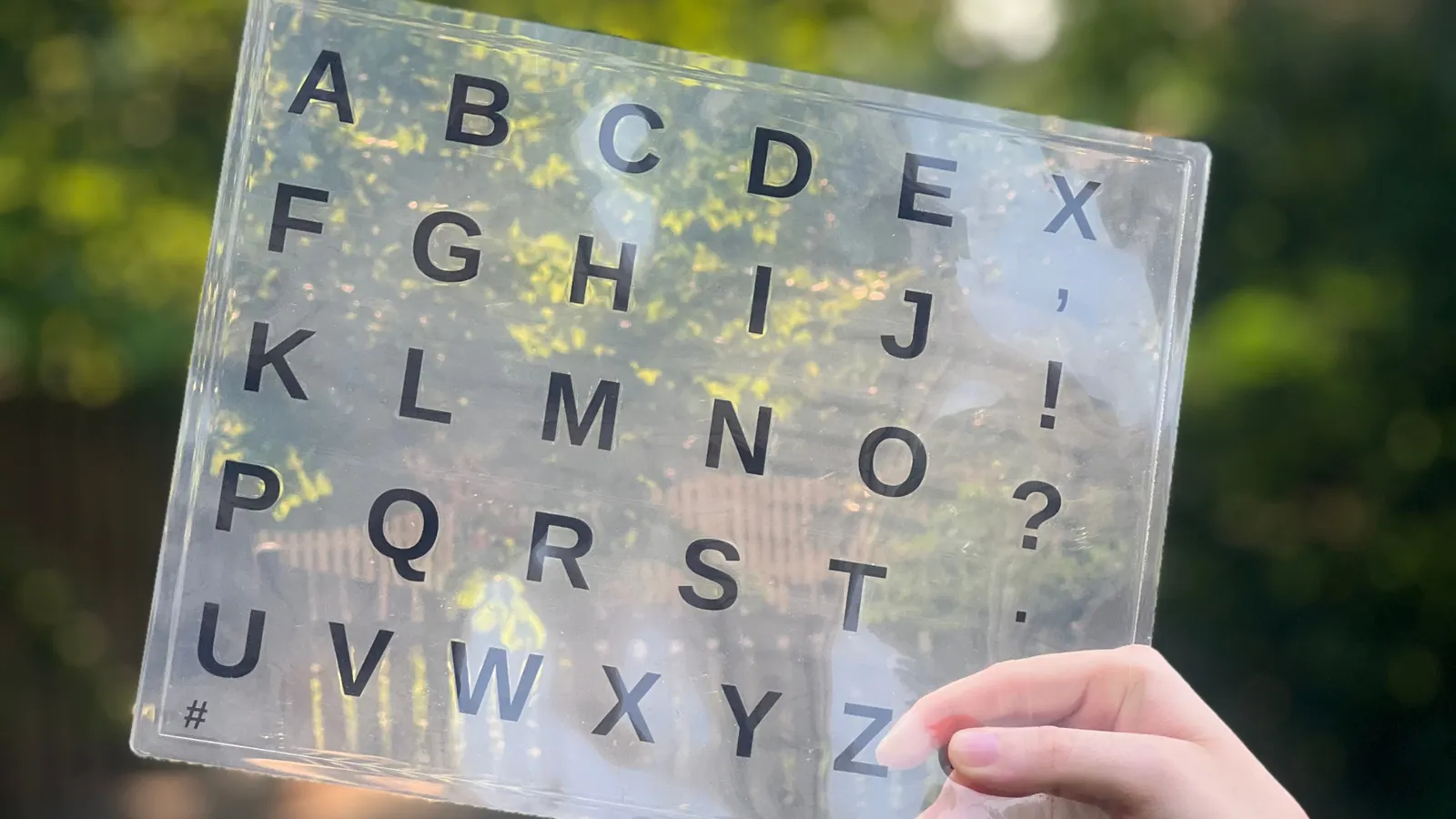
“Presume competence” is a phrase used frequently in disability education, particularly when discussing students who do not use speech as their primary means of communication. At it's simplest, "presuming competence" only means that our baseline expectation of any student is that they can and want to learn. But presuming competence is too often conflated with assuming mastery, or muddled by our cognitive biases when a student cannot yet demonstrate what they know in ways that are familiar to us.
That distinction is especially important for students who can't rely on their speech or motor planning to be understood.
The Least Dangerous Assumption
The principle behind presuming competence can be traced to special education researcher Anne Donnellan. In her influential 1984 article, The Criterion of the Least Dangerous Assumption, Donnellan proposed a standard for making educational decisions when we do not have conclusive information about a student's abilities. [Read more here about measuring a student's abilities.]
She argued that educators should make the assumption that, if it later turns out to have been the wrong one, will cause the least harm to the student's future opportunities and independence.
Consider this: 1) We can assume that because the student cannot reliably answer questions through speech or another conventional manner, the student does not understand the material. Or, 2) We can assume that the student may understand more than they can demonstrate, and continue providing age-appropriate instruction while working to develop a reliable means of communication.
Either assumption could theoretically be wrong. But the consequences of being wrong are not equal. If we overestimate a student's understanding, we may occasionally teach material that is too difficult. We can adjust. If we underestimate the student, however, we may spend years providing simplified instruction, restricting access to academics, limiting opportunities, and lowering expectations.
It's not hard to see which of the two assumptions is more dangerous.
That is the heart of the least dangerous assumption; and of presuming competence. As contemporary guidance from the University of Minnesota's Institute on Community Integration explains, when a student does not make expected progress, Donnellan's framework encourages us to first consider problems with instruction or materials rather than automatically locating the problem within the student.
Speech Is Not the Same Thing as Thinking
For letter board users, presuming competence requires us to separate two things that people instinctively connect: communication performance and cognitive ability.
Most of us are accustomed to people demonstrating what they know: a teacher asks a question, and a student answers it. You may not notice how heavily your judgment of intelligence depends upon that exchange.
Now imagine removing reliable speech and intentional physical movement (apraxia) from the moment. A student may hear the question and understand it but be unable to produce a response. The student has limited or no speech, may have difficulty coordinating movement to point accurately, write, manipulate materials, select an answer, or even raise their hand. Regulation, sensory demands, anxiety, or the classroom environment may further affect performance.
None of these possibilities can prove that the student knows the answer, but as also know, correlation is not causation. Failure to produce the answer does not by itself prove that the student does not understand it.
That uncertainty is why presuming competence matters.
Presuming Competence Is Not Presuming Mastery
Presuming competence should never mean assuming that a student knows everything, refusing to assess skills, or ignoring evidence. For example, you wouldn't assume a speaking student knows algebra. And a letter board user shouldn't be assumed to know algebra simply because we believe they can understand it.
Students still need instruction. They still make mistakes. They still have strengths and weaknesses. They still need meaningful assessment. And students with limited or no speech still have a disability.
The difference is where we start. Instead of asking, “Has this student proven they are capable enough to receive this opportunity?” we can ask, “Have we provided this student with an accessible way to learn, communicate, participate, and show us what they know?”
What Presuming Competence Looks Like in Practice
For a letter board user, presuming competence means speaking to the student in age-respectful language, providing access to grade-level content with appropriate supports, allowing sufficient processing and response time, teaching communication rather than waiting for communication to emerge, and recognizing that inconsistent performance deserves investigation rather than an automatic conclusion of inability.
Most importantly, it means remaining intellectually humble.
We may not know precisely what a student understands. We may not yet know which skills are independent, which require support, or how much a student's performance is affected by communication, motor, sensory, or regulatory demands. Presuming competence does not eliminate those questions.
It simply tells us what to do while we are still answering them.
Forty-plus years ago, Anne Donnellan asked educators to consider the consequences of being wrong about a disabled student. That question remains remarkably relevant for letter board users today.
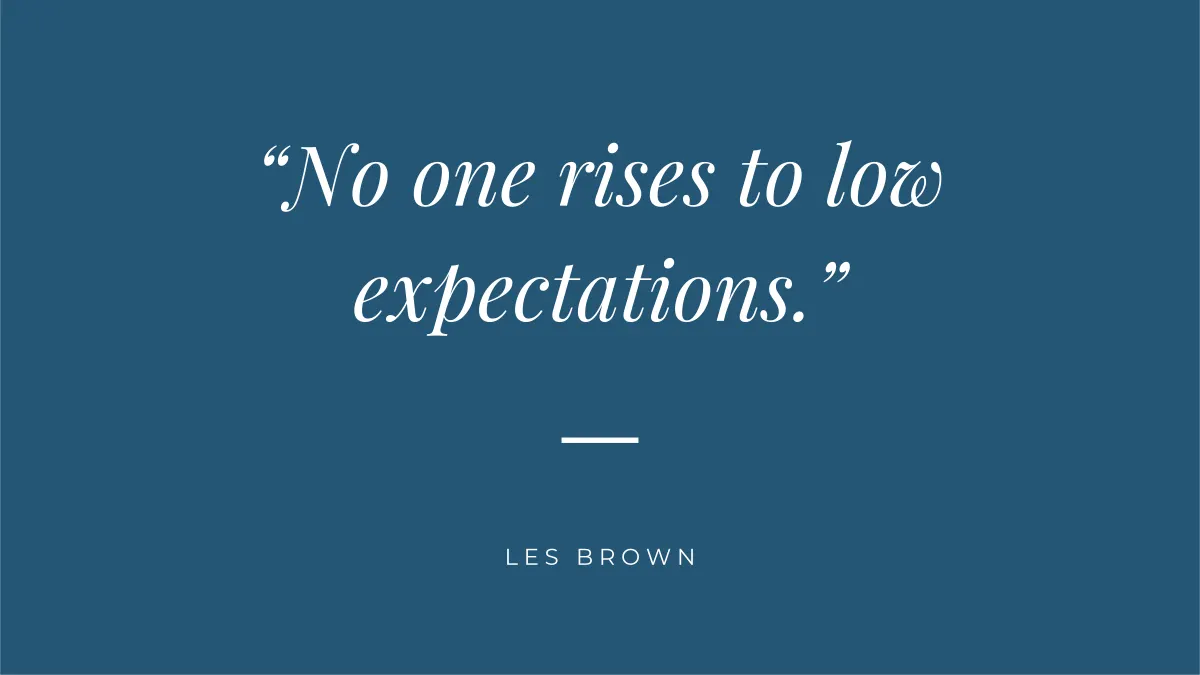
When we are uncertain about a student's abilities, both high and low expectations carry the possibility of error. But they do not carry equal consequences.
We can correct instruction that was temporarily too ambitious. But we can't give a student back the years in which their teachers thought they weren't capable of learning.